• Skip to primary navigation
  • Skip to main content
  • Skip to primary sidebar
  • Skip to footer
  • Search
  • News
  • Customer Portal
  • Contact Us
SPX Communication Technologies

SPX Communication Technologies

SPX Communication Technologies

  • About Us
        • About Us
          • About TCI
          • About ECS
          • About KTS
          • About SPX
        • Careers
  • Spectrum Battlespace
        • Spectrum Battlespace
          • BLACKTALON Ecosystem
          • HF V/UHF
          • Tactical COMINT
          • HFDF
          • RF Jamming
          • Legacy Systems
  • Spectrum Monitoring
        • Spectrum Regulation - Spectrum Monitoring
          • Fixed Stations
          • Mobile Stations
          • Transportable Stations
          • Monitoring Control Center
        • Spectrum Regulation - Spectrum Management
        • Maritime RDF
        • Airport Interference Detection RDF
  • Tactical Data Links
        • Tactical Data Links
          • Evenlode Series
          • ECS Connect
          • C4ISR Applications
          • Sectors
          • Video Data Management System
          • Legacy
  • Digital Interoperability
        • KTS
        • Digital Interoperability
          • Aircraft Integration Group
          • Flight Test Engineering
          • KTS1 Flight Test Aircraft
          • KTS
  • Products
        • Products
          • Antennas
          • HF Communication and Broadcast Antennas
          • Spectrum Battlespace
          • Spectrum Monitoring
          • Data Links
  • Customer Support
        • Customer Support
        • Media & Educational
          • SPX Communication Technologies University
          • Customer Portal
        • Technologies White Papers
        • Contact Us

Uncategorized

Commanding the Spectrum: Marking Electromagnetic Warfare Awareness Week 

Commanding the Spectrum: Marking Electromagnetic Warfare Awareness Week

The electromagnetic spectrum (EMS) is invisible, but the fight to control it is very real. Every radio call, drone link, and data feed depends on it. As militaries, regulators, and security forces increasingly recognize the spectrum as a warfighting domain in its own right, Electromagnetic Warfare Awareness Week is a timely reminder that spectrum superiority is no longer optional. It is decisive. 

Lose control of the spectrum and the effects are immediate and physical: a convoy loses its communications, an air-defense operator goes blind to an incoming threat, a hostile drone slips through unchallenged. Whoever sees, protects, and controls the spectrum first shapes what happens in every other domain — land, sea, air, and cyber. That is why the world’s most capable militaries now treat spectrum superiority as a precondition for winning, not a supporting act.  

The spectrum fight is not theoretical. Across the Baltic and Nordic region, Russian GNSS jamming and spoofing has become a daily occurrence — Estonian regulators report the vast majority of flights experiencing navigation disruption, and Tartu, host of this year’s EW Live, has already seen airline service suspended over GPS interference. A wave of drone incursions that has closed airports from Copenhagen to Vilnius and forced NATO to scramble jets, and it is clear why spectrum superiority has moved to the top of the agenda for militaries and civil authorities alike. This is the environment we all now operate in. 

At SPX Communication Technologies, commanding the spectrum has been our mission since 1967. This week, we want to step back from the hardware and explain what electromagnetic warfare actually is, why it matters more than ever, and how awareness translates into real operational advantage. 

What Is Electromagnetic Warfare? 

Electromagnetic warfare (EW), is the use of the electromagnetic spectrum to sense (ES), protect (EP), and attack (EA). It is traditionally broken into these three pillars:. 

Electronic Support (ES): Detects, intercepts, and locates signals to build a picture of what is happening in the electromagnetic environment, 

Electronic protection (EP): Keeps your own systems working through interference, whether that interference is deliberate or accidental, 

Electronic attack (EA): Disrupts, denies, or degrades an adversary’s use of the EMS. Jamming a hostile drone’s control link is a familiar example. 

A related and increasingly common term is Electromagnetic Spectrum Operations (ESMO), which folds EW together with spectrum management and communications. Where EW is often about winning a fight, EMSO is about orchestrating everything that uses the spectrum so that friendly forces, regulators, and civilian systems can all operate without stepping on each other. Communications intelligence (COMINT), sits within this world too, focused specifically on intercepting, understanding and making sense of adversary communications. 

The Modern Spectrum Threat Landscape 

Two emerging forces have made spectrum awareness more urgent today than ever before; the appearance of drones as an effective force in the battlespace, and EMS congestion. 

 Small unmanned aerial systems are cheap, widely available, and capable of carrying sensors or payloads. Early use of small, unmanned drones initially relied on commercially available “toys” and flying camera platforms which relied almost entirely on radio frequency links to fly, which makes the spectrum both their lifeline and their vulnerability. While countermeasures have been developed, such as drones controlled via fiber optic lines, control of small, unmanned drones via radio links across the EMS is still widely used. Detecting, tracking, and defeating these systems is now a frontline concern for airports, critical infrastructure, and deployed forces alike. The same logic applies to remote-controlled improvised explosive devices, where controlling the spectrum can mean the difference between a neutralized threat and a detonation. 

The second force is congestion. The spectrum is crowded and getting more so. Commercial networks, civilian broadcast, emergency services, and military systems all compete for the same finite resource. In a contested environment, adversaries deliberately add noise and interference on top of that. Operating successfully means seeing through the clutter, understanding what is friendly, what is hostile, and what is simply background, and then acting on that understanding faster than the other side can. 

The third demand follows directly from the first two. The same congested, contested environment that hides hostile drones and buries signals in noise also puts your own links at risk. Airborne intelligence, surveillance and reconnaissance (ISR) feeds, command channels, and the data that ties a force together all have to keep flowing through interference that is sometimes deliberate and always unforgiving. Seeing and defeating threats is only half the job. Keeping your own picture connected when the RF environment is working against you is the other half, and it is just as much a spectrum problem. 

Capability Spotlight 

Awareness is only useful when it connects to capability. The threats above, hostile drones, a congested and contested spectrum, and the constant need to keep your own links alive, map directly onto three areas where we help partners sense, manage, and dominate the EMS: Spectrum Battlespace, Spectrum Monitoring and Management, and Tactical Data Links. 

In Spectrum Battlespace, our BLACKTALON Ecosystem anchors an open-architecture approach to Counter-UAS, pairing detection and direction-finding with defeat options including RF jamming. Alongside it sit tactical COMINT and high-frequency direction-finding solutions that locate signals of interest across HF, VHF, UHF, and above. 

In Spectrum Monitoring and Management, our fixed, mobile, and transportable stations give regulators and defense customers the ability to monitor, measure, and locate emitters, supporting everything from national frequency regulation to airport interference detection and maritime direction-finding. 

In Tactical Data Links, we specialize in moving secure video, audio, and IP data across long ranges and difficult RF conditions over air-to-ground and ground-to-air links, keeping airborne ISR systems connected when the environment works against them. 

Awareness in Practice 

Technology alone does not create spectrum superiority. People do. That is why education is central to how we work with partners. Through SPX Communication Technologies Trainings and our library of technical white papers, we help operators, regulators, and analysts build the fluency to read the spectrum and make good decisions under pressure. Awareness Week is a natural moment to invest in that fluency, whether you are new to the field or refreshing a seasoned team. 

Looking Ahead 

The clear direction of travel is toward open architecture and interoperability. Threats evolve quickly, and closed, single-purpose systems struggle to keep pace. Systems that integrate cleanly, share data, and adapt to new missions will define the next decade of spectrum operations. 

If you want to see where the field is heading in person, we will be at EW Live 26 in Tartu, Estonia, from 15 to 17 September. It is an excellent venue to talk through real spectrum challenges with our team. 

Take the Next Step 

Explore our full product range, download the latest issue of our newsletter, The Frequency, or reach out to start a conversation about your spectrum challenges.  


A Successful Week of Learning and Collaboration at the USTTI Spectrum Monitoring & Management Programme

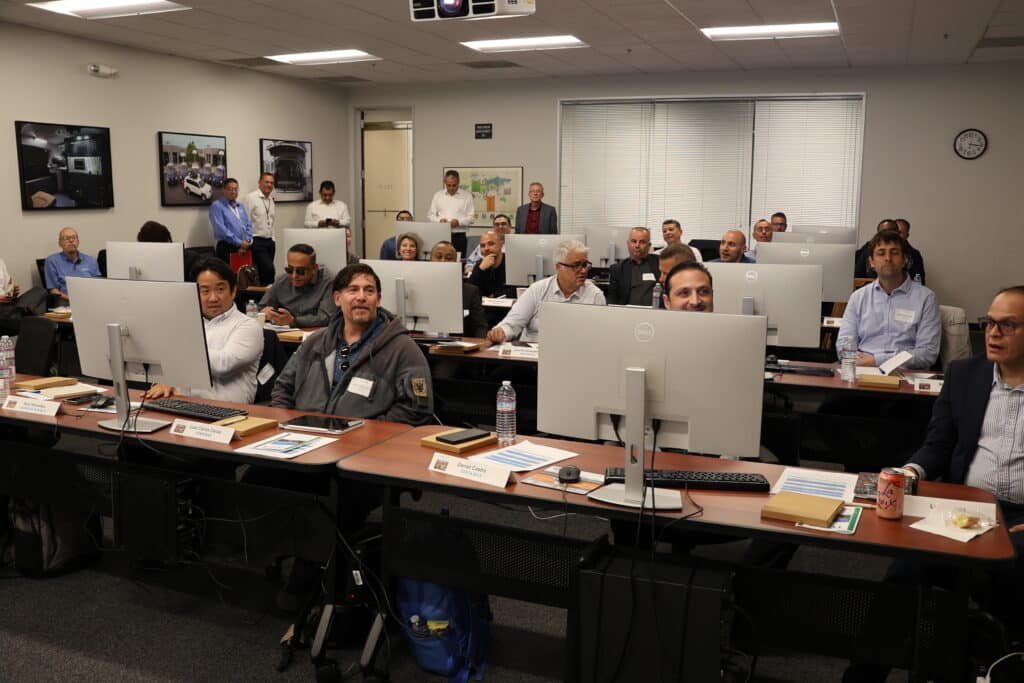
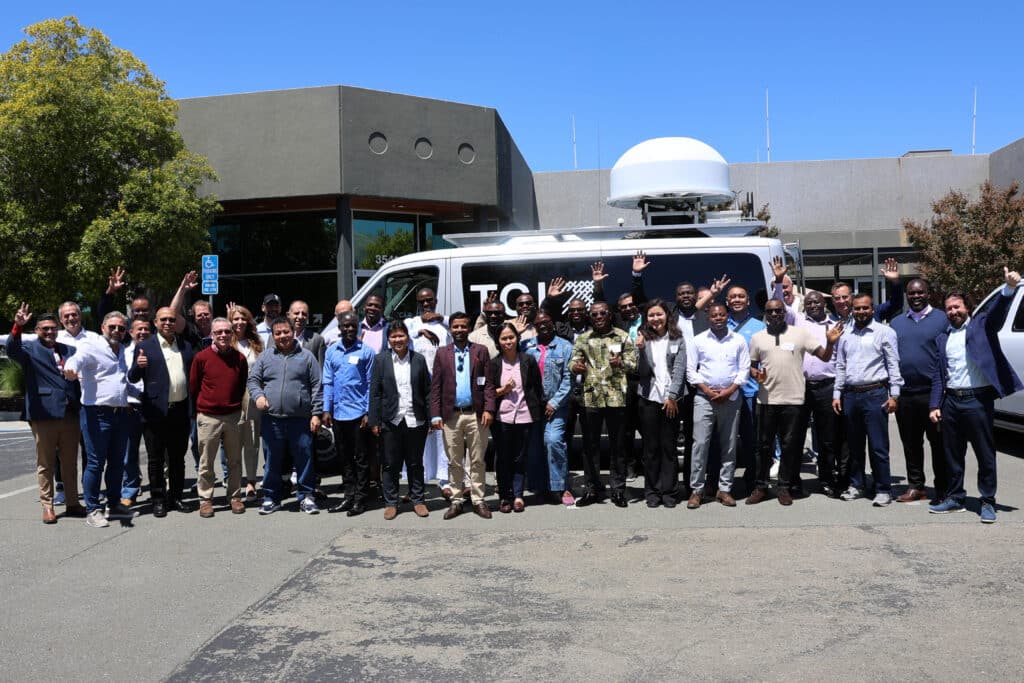
Earlier this month, TCI (part of SPX Communication Technologies), was proud to host another successful USTTI programme on Practical Applications of Spectrum Monitoring and Management at our headquarters in Fremont, California.

The week brought together telecommunications and spectrum professionals from across the globe for an engaging and highly productive training experience focused on modern spectrum monitoring and management practices. 🌍📡

Throughout the event, participants took part in a combination of expert-led presentations, interactive demonstrations, and practical exercises using advanced monitoring technologies within a real operational environment. The course provided valuable opportunities to exchange knowledge, explore emerging challenges within the RF spectrum, and strengthen international collaboration across the telecommunications community.

It was fantastic to see such strong engagement throughout the week, with attendees contributing insights and experiences from a wide range of operational and regulatory backgrounds.

We would like to thank everyone who attended and helped make the programme such an enjoyable and rewarding event. It was a pleasure to welcome you to Fremont, and we hope the knowledge and connections gained during the course will continue to support your important work in the field. 🤝

We also extend our appreciation to the USTTI team, instructors, and organisers whose expertise and commitment ensured the programme’s success.

We look forward to welcoming participants again in the future and continuing to support the global spectrum monitoring and management community.

Until next time! 🚀

USTTI Training Event Approaching: Advance Your Spectrum Monitoring Expertise!

There’s not long to go now until one of the year’s most anticipated telecommunications training events gets underway!

The upcoming USTTI programme on Practical Applications of Spectrum Monitoring and Management is set to bring together professionals from across the globe for a focused, hands-on learning experience.

Taking place from May 4–8, 2026, at TCI’s headquarters in Fremont, California, this intensive course offers a unique opportunity to deepen technical knowledge and gain real-world insight into modern spectrum practices.

Participants can expect a dynamic blend of learning formats, including in-depth instruction led by industry specialists, interactive demonstrations using advanced monitoring systems, and practical exercises inside a cutting-edge operational environment. The programme is designed to bridge theory and application, giving attendees the tools they can immediately apply in their own regulatory, operational, or engineering roles.

Whether you’re working in spectrum monitoring and management, enforcement, or deploying new communications technologies, this training is tailored to strengthen your capabilities and expand your understanding of current global standards and tools.

With the countdown underway, we look forward to welcoming you to our collaborative, internationally focused learning experience. Follow us on LinkedIn to receive live updates during this exciting event at: https://www.linkedin.com/company/tciinternational or https://www.linkedin.com/company/spx-communication-technologies

Elevate Your Spectrum Expertise – Registration Is Now Open!

🚨 Registration is officially OPEN for our USTTI Training Event: Practical Applications of Spectrum Monitoring and Management

📅 May 4–8, 2026
📍 TCI Headquarters | Fremont, California, USA

With less than 30 days to go, this is your opportunity to join engineers, regulators, and spectrum monitoring and management professionals from around the world for an immersive week of:

✅ Expert‑led classroom instruction
✅ Live equipment demonstrations
✅ Hands‑on training at TCI’s state‑of‑the‑art facility

💡 Whether your focus is spectrum monitoring, regulatory enforcement, or technology deployment, this course is designed to enhance your skills and introduce you to modern, globally used telecommunications equipment and techniques.

👉 Secure your spot today:
https://ustti.org/course/practical-applications-of-spectrum-monitoring-and-management/

Commanding the Electromagnetic Spectrum: Next-Generation COMINT for the Modern Battlespace

In today’s operational environment, information dominance is inseparable from electromagnetic spectrum control. Across air, land, maritime, space, and cyberspace, defence and security forces rely on secure, uninterrupted access to Radio Frequency (RF) communications to achieve mission success.

Yet the electromagnetic spectrum is increasingly congested, contested, and weaponised. State adversaries deploy sophisticated electronic warfare (EW) systems, while non-state actors exploit low-cost radios, mobile networks, and uncrewed aerial systems (UAS) to communicate, coordinate, and threaten operations.

Against this backdrop, Communications Intelligence (COMINT) has become a critical force multiplier. The ability to detect, identify, track, and analyze RF emissions quickly and accurately, now underpins operational effectiveness across every domain.

The Evolving Electronic Warfare Environment

The modern electronic battlespace is more complex than ever. The proliferation of software-defined radios (SDRs), commercial communications technologies, and rapidly deployable transmitters means that almost any actor can generate RF activity.

Even lightly equipped insurgent groups depend on phones, handheld radios, and ad-hoc networks. To maintain tactical and strategic advantage, modern forces must be able to detect and interpret every signal, even in spectrum-denied or highly cluttered environments.

Traditional wideband receivers often struggled to balance bandwidth, sensitivity, and agility. Monitoring a wide section of the spectrum could come at the cost of precision, while narrowband focus improved accuracy but risked missing emerging threats. As operational demands shift between counter-terrorism, hybrid conflict, and large-scale peer engagements, legacy COMINT systems frequently lack the flexibility required for modern missions.

Next-Generation COMINT: The SPX 955 and 957 RF Collection Systems

To meet these challenges, SPX Communication Technologies has developed the 955 and 957 RF COMINT collection systems – a next-generation family of solutions engineered specifically for defence, intelligence, and security operations.

Designed for continuous, real-time signal collection, the 955 and 957 deliver enhanced situational awareness and faster decision-making across complex electromagnetic environments. Each system integrates receiver, antenna, and advanced processing software, enabling both standalone and networked COMINT operations.

Whether deployed as portable assets, vehicle-mounted systems, or part of a multi-sensor architecture, the 955 and 957 provide forces with the tactical edge required to operate confidently in contested spectrum environments.

Wideband Coverage Without Blind Spots

A defining capability of the 955 and 957 is their ability to monitor up to 80 MHz of spectrum simultaneously. This wideband coverage allows operators to maintain comprehensive awareness of the RF environment, even amid dense signal activity and interference.

When required, operators can dynamically narrow focus to specific frequencies or emitters, extracting high-resolution intelligence from signals of interest. This balance between broad surveillance and precise analysis ensures no critical emissions go undetected while maintaining the depth needed for actionable intelligence.

Look-Back Recording for Deeper Intelligence Insight

Modern intelligence operations demand more than real-time awareness. The 955 and 957 feature a 72-hour look-back recording capability, allowing teams to rewind and analyse historical RF activity once new context or intelligence emerges.

Operators can determine where a signal originated, how it moved, how long it persisted, and how it fits into broader operational patterns. Beyond the immediate look-back window, a long-term database preserves signal metadata for trend analysis, investigations, and future mission planning, providing a richer, more complete intelligence picture.

Mission Agility Across Modern Conflict Scenarios

Contemporary conflict rarely fits a single operational model. Conventional warfare, irregular tactics, special operations, and cyber activity often occur simultaneously. The 955 and 957 are designed for this reality.

Pre-loaded mission profiles allow operators to switch roles instantly, supporting everything from monitoring insurgent communications to tracking conventional military formations. This flexibility ensures COMINT assets remain relevant and effective as mission priorities evolve.

Centralised and Decentralised COMINT Operations

Operational effectiveness depends on adaptable command and control. The 955 and 957 support both decentralised frontline operations and centralised intelligence analysis.

The intuitive Blackbird user interface reduces training requirements, enabling operators to become proficient quickly and expanding the available pool of COMINT personnel. Frontline teams can analyse signals independently, while data can also be transmitted back to command centres for broader situational oversight.

Designed to operate over low-latency and constrained bandwidth, the systems ensure continuity of operations even in degraded network conditions. Multiple users can access shared datasets concurrently, each focused on different objectives or areas of interest.

Hybrid Geolocation for Faster, More Accurate Targeting

Accurate emitter location is critical to spectrum dominance. The 955 and 957 employ hybrid geolocation, combining rapid angle-of-arrival techniques with more precise location refinement methods.

This approach allows operators to quickly identify likely emitters, then apply higher-precision analysis as required – all within a single, integrated system. The result is faster targeting with fewer assets and reduced operational complexity.

Seamless Integration and Counter-UAS Capability

The 955 and 957 are fully backwards compatible with existing antennas and infrastructure, including third-party hardware. This allows defence organisations to upgrade processing capabilities while retaining proven assets, maximising return on investment.

The systems also integrate seamlessly with SPX Communication Technologies’ BLACKTALON™ Counter-UAS ecosystem. By combining COMINT and RF sensing with advanced counter-drone capabilities, operators can detect, identify, locate, and neutralise UAS threats based on their RF emissions.

BLACKTALON effectively disrupts GNSS, command, control, and telemetry links used by both commercial and military drones, while safeguarding friendly communications, ensuring airspace dominance in an increasingly congested UAS threat environment.

Achieving Spectrum Dominance with SPX Communication Technologies

Electronic warfare and communications intelligence now shape the tempo of modern operations. The ability to sense, understand, and dominate the electromagnetic spectrum defines mission success.

With the 955 and 957 RF COMINT systems, SPX Communication Technologies delivers faster detection, deeper insight, and decisive operational advantage – empowering defence, intelligence, and security forces to stay ahead in today’s contested battlespace.

Find out how SPX Communication Technologies can support your mission and help you command the spectrum.

From Critical Infrastructure to Mass Gatherings: Countering the Expanding Drone Threat

The global drone threat is escalating. Once confined to the battlefield, drones and uncrewed air systems (UAS) are now being deployed for sabotage, espionage, smuggling, and disruption across civilian and critical infrastructure domains. Whether interfering with air traffic, conducting hostile surveillance, or creating panic at large-scale events, malicious drone activity poses a growing challenge for governments, defense forces, and public safety authorities worldwide.

A Growing Threat Across Borders

Recent incidents underline the urgency of effective Counter-UAS technology. In the UK, RAF bases and major sporting venues have faced unauthorized drone incursions. At Twickenham Stadium, a drone carrying a political message highlighted the potential for disruption at mass gatherings. In prisons across England and Wales, drone-related incidents surged by 43% in a single year, as criminals exploited technology to bypass security.

Elsewhere in Europe, drone activity has disrupted air travel at Sofia International Airport, raised espionage concerns near critical energy infrastructure in Finland, and forced Romania and Poland to introduce new legislation empowering authorities to disable hostile drones. These incidents reflect a wider reality: drones are inexpensive, widely available, and increasingly difficult to monitor or intercept.

The Role of Counter-UAS Technology

As drones become faster, more mobile, and more advanced, the demand for robust Counter-UAS solutions has never been higher. At SPX Communication Technologies, we are seeing an 80% increase in enquiries across Europe as organisations seek proven, reliable defences.

Our BLACKTALON solution is at the forefront of RF countermeasure technology, detecting, tracking, and neutralising drones by jamming combinations of GNSS, command, control, and telemetry signals. This ensures a decisive response to both commercial and military-grade drones, while safeguarding friendly RF signals.

Counter-UAS solutions must adapt to a wide range of scenarios:

  • Critical infrastructure protection – airports, energy facilities, and ports
  • National defence – military installations and border security
  • Public safety – stadiums, city centres, and large gatherings

Flexibility is key. Effective systems must provide both fixed-site coverage and mobile deployment options, enabling rapid response wherever the threat emerges.

The Importance of Proven Solutions

While new drone defence technologies continue to flood the market, not all solutions are created equal. Authorities face a dilemma: invest in proven, field-tested systems or risk cheaper, unverified alternatives that may fail under pressure. With decades of expertise in RF technology, SPX Communication Technologies delivers trusted, mission-critical solutions that consistently perform in complex operational environments.

Legislative Support Driving Change

Governments across Europe are strengthening legal frameworks to counter the UAS threat. From empowering military and law enforcement personnel to engage hostile drones, to recognising RF jamming as a verified and safe countermeasure, legislative changes are enabling more agile, coordinated defence strategies.

Looking Ahead

As the drone threat continues to evolve, so too must Counter-UAS technology. SPX Communication Technologies is investing in next-generation jamming solutions with greater range, spectral purity, and adaptability. Our commitment is to ensure governments, defence organisations, and public safety authorities are always one step ahead of malicious actors.

Reliable Counter-UAS solutions are no longer optional – they are essential. From protecting national infrastructure to safeguarding public events, proven RF inhibition technology like BLACKTALON is mission critical for countering today’s expanding drone threat.

Contact us for more information!

  • Page 1
  • Page 2
  • Page 3
  • Interim pages omitted …
  • Page 12
  • Go to Next Page »

Primary Sidebar

You May Also Like

  • Commanding the Spectrum: Marking Electromagnetic Warfare Awareness Week 
  • A Successful Week of Learning and Collaboration at the USTTI Spectrum Monitoring & Management Programme
  • USTTI Training Event Approaching: Advance Your Spectrum Monitoring Expertise!
  • Elevate Your Spectrum Expertise – Registration Is Now Open!
  • Commanding the Electromagnetic Spectrum: Next-Generation COMINT for the Modern Battlespace

Contact Us

"*" indicates required fields

This field is for validation purposes and should be left unchanged.
Name*

Footer

SPX Communication Technologies empowers our partners to Command the Spectrum within civilian, law enforcement, intelligence, and defense environments. Established in 1967, we have been providing RF solutions and support services ensure mission success globally.

  • Facebook
  • LinkedIn
  • Twitter
  • YouTube

Links

  • Newsletter Sign Up
  • Customer Portal
  • Careers
  • ITU Compliance
  • SPX Communication Technologies University
  • Partners
  • HF Communications and Broadcast Antennas

Terms

  • SPX Terms of Use
  • SPX Privacy Policy
  • SPX Cookie Policy

© 2026 TCI International, Inc. · All Rights Reserved · TCI is a subsidiary of SPX Technologies